
Starting a photography business comes down to three things: a chargeable skill, gear you can rely on, and a clean legal and financial setup. You can learn how to start a photography business in about six weeks of evenings, and you do not need a studio, a new camera or a large audience to begin. The part that decides whether it works is the boring setup work that comes before the first paid shoot.
I have watched a lot of photographers go pro. The ones who make it are rarely the best shooters in the room. They are the ones who chose one kind of client, wrote down a price, registered the business, and sent an invoice. The ones who struggle are usually talented and completely underprepared on paper.
Everything below is in the order I would do it. Skip nothing, but also do not overthink it. Aim for a business that survives its first slow month.
Table of Contents
- What You Need
- How to Start a Photography Business: Step by Step
- How to Start a Photography Business by Choosing a Profitable Niche
- Define Your Photography Services and Ideal Client
- Create a Simple Photography Business Plan
- Set Your Prices and Business Structure
- Handle the Legal and Administrative Essentials
- Build a Focused Portfolio and Online Presence
- Market Your Photography Business Locally and Online
- Create a Booking and Client Workflow
- Run Your First Paid Photography Job
- Common Mistakes
- Frequently Asked Questions
- Conclusion: Start With a Clear Photography Business Plan
What You Need
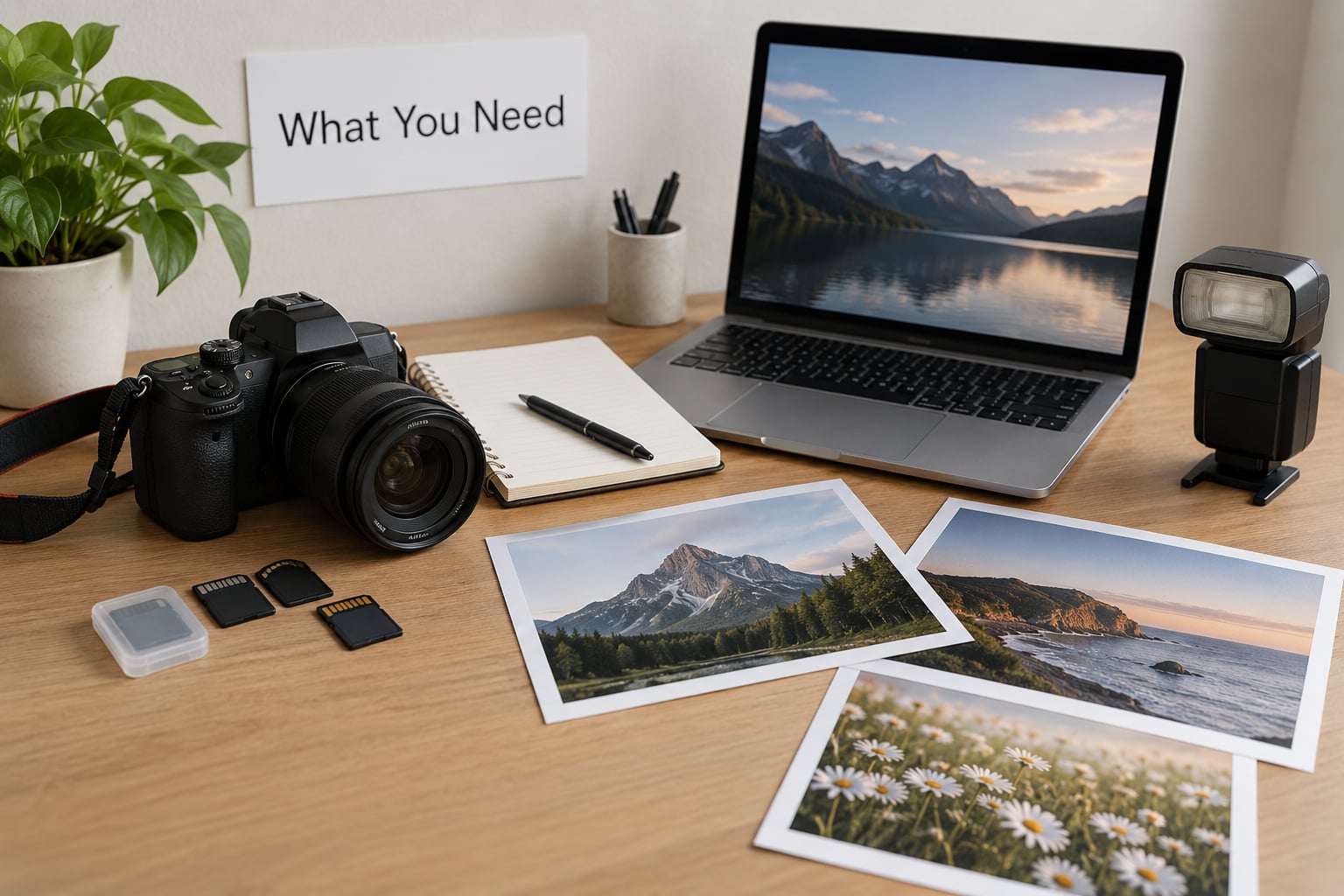
You need far less than most beginners assume. Here is the full prerequisites list, grouped so you can see what is essential and what can wait.
- A defined niche. One audience and one service, such as newborn portraits, real estate listings or headshots for small businesses.
- Reliable equipment. One camera body you know well, a lens that suits your niche, two memory cards, and storage that holds at least a full season of work.
- A one-page business plan. Goals, target market, revenue streams, startup costs, pricing assumptions and first-year targets on a single page.
- A startup budget. Real numbers for gear, software, insurance, registration, website and printing, kept in one spreadsheet.
- Legal and tax basics. Business registration where required, an EIN, a separate business bank account and a record-keeping habit.
- Contracts and pricing. A written agreement covering scope, payment, reshoots, image usage and delivery, plus a price list you can say out loud.
- Portfolio materials. Twelve to twenty images that represent the work you want to be hired for, not your personal favourites.
- A booking system. A calendar for scheduling, a contract and signature tool, an invoicing tool and a client gallery for delivery.
- Insurance. General liability at minimum, and equipment or theft cover if you carry expensive gear.
- One marketing channel. A Google Business Profile and one social platform, not twelve accounts.
Two of those deserve a note. Contracts are the item beginners most often skip, and they are the item that saves you when a client wants unlimited reshoots or asks to use your images for advertising. Get one template reviewed before you need it, not after.
The second is the business bank account. It takes an afternoon to open and it costs nothing in most cases. Mixing personal spending with business income is the single most common reason self-employed photographers lose track of what they actually earned.
How to Start a Photography Business: Step by Step
How to Start a Photography Business by Choosing a Profitable Niche
Choose a niche by looking at who already pays photographers in your area and what they repeatedly need. Weddings, newborn sessions, real estate, headshots and product work are the usual five, and each has a different pace, income pattern and skill floor.
Spend a week checking what is actually available near you. Search your city name plus each type of photography, look at how many photographers already compete, and read the reviews to see what clients complain about. A saturated market with one clear complaint is often a better opening than an empty one where nobody knows what you charge.
Pick the niche where your skills are already decent and the demand repeats. The visible sign this step is done: you can finish the sentence “I photograph blank,” and a stranger understands what that means.
Define Your Photography Services and Ideal Client
Turn the niche into an offer you can describe in three sentences. Name the client, the problem you solve, what they receive, how the session runs, how long delivery takes and what is not included.
A focused offer sounds like a 45-minute headshot session for local business owners, delivered as 15 retouched images in two weeks, one location, no prints. A vague offer sounds like professional photography services for anyone, which is really no offer at all.
Write down your boundaries too: session length, reshoot policy, revision rounds, travel within a set radius and cancellation terms. Boundaries written before the booking are boundaries you can enforce calmly.
Create a Simple Photography Business Plan
A one-page plan is enough. It should hold your goal for the first year, your target market, where revenue comes from, what equipment you need, estimated startup costs, your pricing assumptions, marketing channels and two measurable targets.
Make the targets concrete. For example, two paid sessions a month by the end of month six, and a repeat client rate above a third of jobs. Vague goals such as get more exposure give you nothing to adjust.
For a different angle on turning images into income, read how to make money with fine art photography and its proven plan. The business mechanics transfer even when the subject changes.
Set Your Prices and Business Structure
Most beginners ask what to charge when they should ask how to structure the charge. Per hour, per image, flat session fee and tiered packages all work, and each suits a different kind of business.
Per hour rewards slow work. Per image punishes you when a session takes three times longer than planned. A flat session fee is the easiest to sell and the easiest to deliver a profit from, provided you control the scope. Packages give clients a clear upgrade path and raise your average ticket without a new conversation.
Build the number from the bottom up. Add up shooting time, travel, editing and culling, admin, marketing, gear costs, insurance, software and printing. Add the tax you owe and a profit margin. Divide by the number of jobs you can realistically deliver in a year, and that is your floor.
Then set your package design: what is included, what costs extra, what a reshoot costs, what revision limits are, and how long you hold the deposit. Add-ons such as video, drone coverage or rushed delivery are where margin quietly comes from.
One warning about the headline rate. A session priced high can still pay badly if it eats ten hours of admin and editing. Work out your effective hourly rate, total fee divided by every unpaid hour, and judge your pricing on that number.
Handle the Legal and Administrative Essentials
Register the business in your state or country if local rules require it, then get an EIN from the IRS so clients can pay a business rather than a person. Open the separate bank account and card at the same time.
Decide between a sole proprietorship and a single-member LLC with a professional rather than guessing. The general rule: a sole proprietorship is simpler and cheaper, an LLC adds liability protection and costs more to maintain, and an S-corp election changes payroll and tax treatment in ways that only make sense once earnings are steady.
Requirements vary by state and change. Confirm filing fees, business licence rules, permits and anything specific to your location with a qualified local professional or your state filing office before you invoice anyone.
Keep the records from day one: every invoice, every receipt, every mileage log and every contract. Set aside a fixed percentage of every payment for tax. What feels like a small habit at the start is the difference between a manageable quarterly bill and an unwelcome one.
Build a Focused Portfolio and Online Presence

Build your portfolio from work that represents the jobs you want, even if you have to shoot them yourself or at a reduced rate first. Twelve strong images beat sixty uneven ones, and consistency in style is what a client is really buying.
Your website needs five things: a home page that says what you shoot and where, one page per service, a small portfolio, a clear contact and booking path, and a real email address on your own domain.
Compress images, write descriptive alt text, and make sure the site loads on a phone. Most of your first enquiries will arrive from a phone.
Our guide to how to build a photography portfolio website walks through the build in detail.
Market Your Photography Business Locally and Online
Start local, because nearby clients are the ones who can actually book you. Claim a Google Business Profile, then walk into complementary local businesses: wedding venues, florists, makeup artists, agents, boutique shops. Bring a printed card and a five-minute conversation, not a pitch.
Ask past clients for referrals with a specific request. Tell them the exact kind of client you want, because a general ask rarely produces anything.
Pick one social platform and post work from paid and portfolio shoots consistently. Our guide to growing a photography account on social media covers the parts that actually move enquiries.
Track what counts: inquiries, booked jobs, average ticket and repeat rate. Likes are not a business metric. Run this for ninety days before you add another channel.
Create a Booking and Client Workflow
Write the workflow down once so every job runs the same way. Inquiry, short consultation, written proposal, signed contract, deposit paid, date scheduled, shot list shared, shoot, cull and edit, final delivery, one round of feedback, testimonial request, follow-up six months later.
A simple client questionnaire at the inquiry stage collects names, ages, contact details, location and must-have shots before the session, which removes most on-site surprises.
Set delivery expectations in writing, including how long clients have to request changes. Nobody objects to a deadline they were told about in advance.
Run Your First Paid Photography Job
Before the day itself, confirm the scope in writing, the payment status, the permissions you need, the timing, who backs up the files, what happens on site, and when and how delivery happens.
Back up to two separate locations before you format any cards. Shoot the list, then check it against the brief before packing. Rushing the last twenty minutes is where most client disappointments begin.
After delivery, ask for the testimonial while the client is happy, note what they asked for most, and fold that into how you describe your service. Your first paid job is mostly research, and the second one is better because of it.
Common Mistakes
Most photography businesses do not fail on image quality. They fail on avoidable setup errors, and every one of these has a straightforward fix.
Buying gear before choosing a niche. Fix: name your niche first, then buy only what that work demands. Start with what you own and upgrade when a specific limit blocks a paid job.
Staying too broad. Fix: pick one client type for your first six months and describe your work in terms of that client, not in terms of photography.
Copying a competitor’s pricing. Fix: price from your own costs and service level. Matching someone else’s number without matching their cost structure is how you end up working for less than the going rate.
Pricing the session and ignoring the hours. Fix: calculate your effective hourly rate including editing, admin and marketing, then adjust until it clears your target.
Skipping contracts and releases. Fix: use one signed agreement covering scope, payment, reshoots, usage and delivery, plus a release when you photograph private individuals or minors.
Underestimating editing. Fix: time your cull and retouch on three real jobs and build the real number into your price. If editing eats your afternoon every time, outsourcing retouching is a business decision, not a failure.
Running free work forever. Fix: cap portfolio-building shoots, offer them at a reduced rate for a limited window, and write down the end date. Free for friends, then never again, is a fast route to resentment.
Depending on one marketing channel. Fix: referrals and direct outreach carry most new businesses early on. Social is a supplement, not the engine.
Confusing visibility with bookings. Fix: measure inquiries and signed contracts. A full profile with an empty calendar is marketing that is not working.
Two habits help more than the rest. Put a portion of every payment aside for taxes on the day it lands, and ask every client for a review and a referral the week after delivery.
Frequently Asked Questions
Do I need a photography business to charge for photos?
Not legally in every place, but practically yes. Registering your business, getting an EIN and opening a separate bank account lets clients pay a business, keeps records clean and makes tax time far easier. It also protects your personal assets if gear is damaged on a client’s property. Check the specific rules where you live, because requirements differ by state and country.
How much money do I need to start a photography business?
Less than most beginners assume, because you can start with equipment you already own. Budget for any gear you must buy, software subscriptions, insurance, business registration, a website and printing, plus a reserve for slow months. Keep the figure low by starting with what you own, buying second-hand, and delaying any studio, new vehicle or paid advertising until clients are already paying you.
Should I start a photography business as an LLC?
A sole proprietorship is simpler and cheaper to run, while an LLC adds liability protection and costs more to maintain in annual fees and separate tax filings. Most beginners start as a sole proprietor and form an LLC once revenue is steady or they work in higher-risk settings such as events, commercial property or work involving minors. Ask a local professional which structure fits your situation.
How do I price my first photography services?
Decide the pricing unit before the number. A flat session fee is easiest to sell and easiest to control, while packages raise your average ticket. Build the figure from your costs: shooting, travel, editing, admin, gear, insurance, software and printing, then add tax and a profit margin. Set a minimum order, require a deposit, and raise rates every few bookings while demand holds.
How long does it take to start getting photography clients?
Most photographers working steadily reach a few paid jobs a month within three to six months of a focused launch, though it varies widely by market and niche. Portfolio-building shoots usually come first, then referrals and direct outreach, then search and social enquiries. Treat six months as the realistic window and track inquiries each month rather than judging progress by follower counts.
Conclusion: Start With a Clear Photography Business Plan
If you do only three things this week, do these: choose one niche and write the sentence describing your ideal client, build twelve portfolio images that match that client, and publish a single service page with a booking link and your email address.
The paperwork comes next, and it is quicker than people fear. Register the business if your location requires it, get an EIN, open the separate account, have one contract reviewed, and set a price you can say without apologising for it.
Then start asking for work, keep the promises you made, and raise your rates as the calendar fills. A photography business grows from repeat clients and clear boundaries far more often than from better equipment.