
Most photographers find their first models the same way: a friend, or a stranger whose work they liked enough to message. Learning how to find models for a photo shoot properly means casting on purpose instead of waiting for a yes that never comes.
You can find models by approaching people whose work already matches yours — through friends and friends of friends, local photography and TFP groups, Instagram location tags, and dedicated platforms such as Model Mayhem and Purpleport. Plan for volume: roughly half of cold messages go unanswered.
The whole process takes about a week of outreach for a casual portfolio shoot, and considerably longer if you need a specific look for commercial work. Here is the sequence that gets the most replies from the least effort.
Table of Contents
- What You Need
- Step-by-Step: How to Find Models for a Photo Shoot
- 1. Define the shoot concept and model profile
- 2. Write a short, professional model brief
- 3. Choose the right places to find models
- 4. Create a clear outreach message
- 5. Review applications consistently
- 6. Confirm the details before the shoot
- 7. Prepare a respectful working environment
- 8. Direct the session and check in
- 9. Deliver selected images and maintain the relationship
- Common Mistakes
- Frequently Asked Questions
- How do I find professional models for a photo shoot?
- Can I find models for free for my photography project?
- What should I offer a model who poses for my photo shoot?
- How do I write a message to a model asking them to participate?
- Do I need a model release for a creative photo shoot?
- How should I prepare for my first photo session with a model?
- Conclusion
What You Need
Most disappointing responses trace back to an unclear request. Before you contact anyone, have these five things written down. Ten quiet minutes now saves a week of back-and-forth later.
- A one-sentence concept. What are the images for, and what should they feel like? “Moody editorial portraits in an empty swimming pool” beats “some cool photos”.
- A one-page brief. Reference images, mood, location, wardrobe notes, rough shot count and timeline. Two or three reference images do more work than three paragraphs of description.
- A compensation decision. Decide what you are offering before you ask: paid work, prints and files, or credit plus copies. Never leave this for the model to bring up.
- Usage terms. Say where the images can appear — your portfolio, social media, print, a paying client — and for how long. Unlimited usage has a cost, and models know it.
- A model release and a safety plan. A signed release, a public meeting point, and the name of someone who knows where you are.
Add a link to your own work, even if it is thin. Aspiring models and experienced ones both check the portfolio before replying, and a short series of self-portraits is better than an empty profile.
Step-by-Step: How to Find Models for a Photo Shoot
1. Define the shoot concept and model profile
Write down what the images need before you decide who should be in them. Is this a personal project, a lookbook for a clothing brand, or headshots for a dancer? Each one asks for a different kind of person.
Then describe the person, not the look. Skin that photographs well under your lighting, comfort in fitted clothing, someone who can hold a still frame for ten seconds, or someone who has never posed and will need direction — all of these narrow the search immediately.
Where you shoot changes the candidate list too. If you want an industrial look, scout the spot before you cast; if the location needs a permit or has a restricted list of people, that rules people out. Finding photo locations near you is often the step that decides which models you can actually work with.
2. Write a short, professional model brief
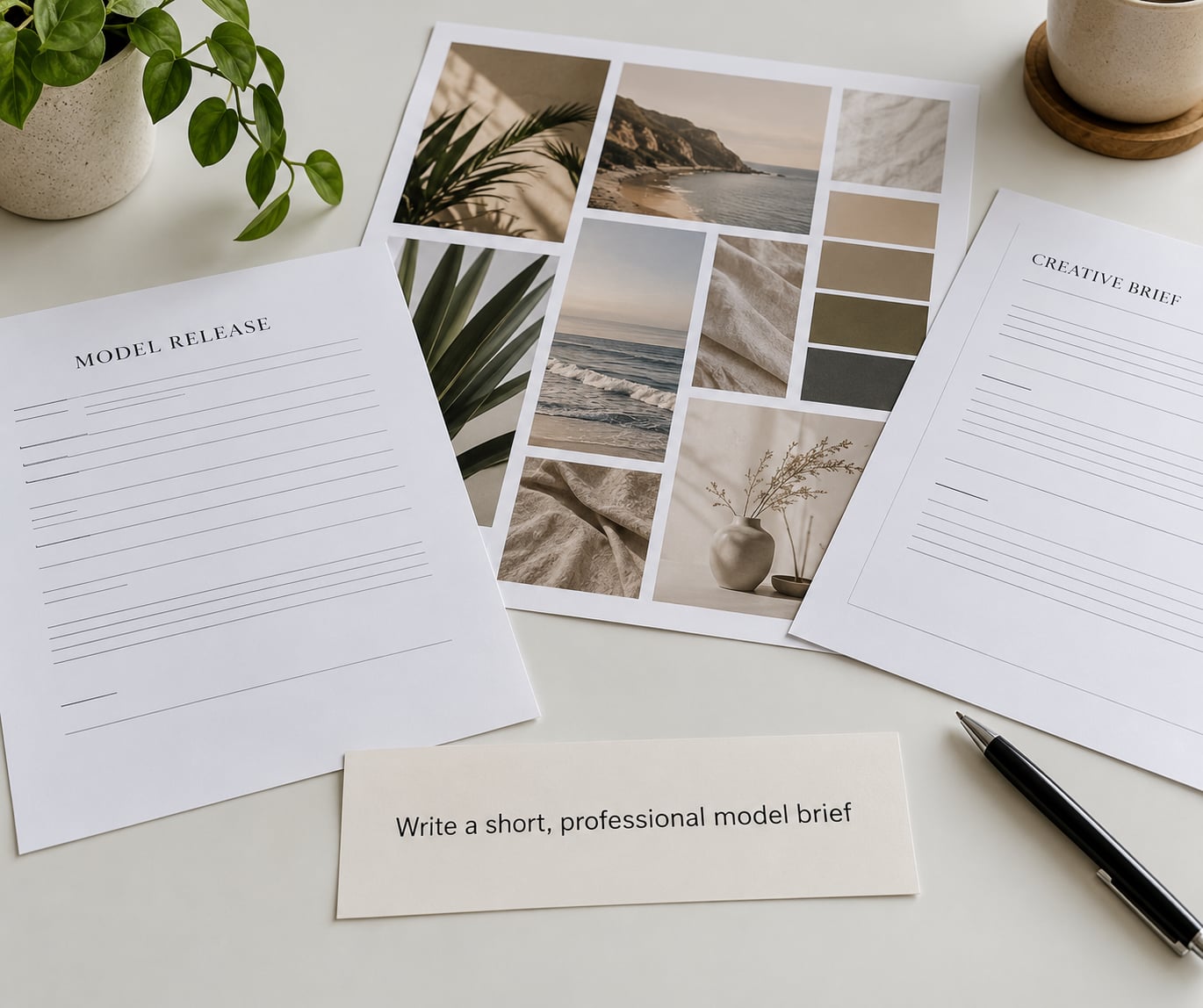
A good brief fits on one page and answers every question a model will ask: what, when, where, how long, what to wear, what you give back, and what happens to the images.
Keep the reference section visual. Pin three to five images that show the mood, the lighting and the wardrobe range you have in mind, and add a line about what you want to avoid. Models reply faster to a clear visual direction than to a paragraph about atmosphere.
Include the awkward parts too. If the shoot is outdoors in November, say so. If you need a swimwear look, say so now, not at the location. Aspiring models report being pushed into clothing they did not agree to when outfits were left vague, and that kind of surprise costs you the collaboration.
3. Choose the right places to find models
Different channels suit different shoots, and the strongest one depends on your budget and how specific the look is.
- Friends and friends of friends. The fastest route to a first portfolio. It takes ten minutes of asking and nobody has to vet a stranger.
- Local photography groups and meetups. In-person, low-pressure and full of people who already understand the time cost of a shoot.
- Facebook TFP and TFCD groups. Regional groups are consistently busy and are the most reliable local channel for unpaid work.
- Instagram location tags and hashtags. Search your city tag plus terms like TFP, model, test shoot. Look at who posts their own work, not reposts.
- Model Mayhem and Purpleport. Portfolio-based, with search by location and style. Expect to filter hard; both are full of people who are building books, not shooting for free.
- Performing arts departments. Drama, dance and theatre courses produce people used to being directed, and headshots they need anyway.
- Agencies and commercial directories. The right route for a paid campaign, and the slowest, with booking requirements on top.
Do not put all your eggs in one basket. Pick two channels, run them for a week, and see which one produces replies before you invest more time in it.
4. Create a clear outreach message
Cold messages get ignored for two reasons: they open with a compliment about the recipient’s looks, and they hide the practical details. Flip both. Lead with the work, and put the compensation line in the first three lines.
A structure that works: one sentence on the project, the date and location, what you are offering, what you need from them, and one clear next step. Around 90 words is plenty.
Say something like this:
Hi — I’m planning a moody editorial portrait series in an empty indoor pool, shot on a Saturday afternoon in November. I’d love you to model for it. I’m offering 15 retouched images plus full-resolution files for your own portfolio, with credit on every published frame. Non-commercial, my portfolio and print only. I shoot on a tripod, so there is no one directing you at any point beyond setup. Here’s a link to my work. If you’re interested, I can send the full brief and the release form to read before you commit to anything.
The final line matters more than the rest. Giving someone an easy way to say yes, and a way to read the details without a conversation, roughly doubles your response rate. If a week goes by with no reply, one short follow-up is fine; a third message is not.
5. Review applications consistently
Scoring applications one at a time, in the order they arrive, produces inconsistent choices. Use the same checklist for everyone, every time.
- Does their existing work show poses and expressions you need?
- Are they free on the date, including travel time to the location?
- Do they answer clearly and politely, or do they reply with one word?
- Are they comfortable with the wardrobe and the locations described in the brief?
- Is there a guardian present or a chaperone, if they are under 18?
Availability is the hardest filter and the one that kills shoots. Someone enthusiastic but free only on Sundays is no use for a Saturday plan, no matter how good their book is.
6. Confirm the details before the shoot
Send a short written confirmation, even if everything already happened in messages. It takes five minutes and it prevents most of the arguments that happen on the day.
Cover the call time and finish time, the exact meeting point including parking, the duration of the session, outfit and props, what you are providing, what they bring, payment or reimbursement, how many edited images they receive and when, and the usage terms in plain words. Ask them to reply with a yes.
Include the model release with it, unsigned, so they can read the wording before they travel. A release that surprises someone on location gets refused on location.
7. Prepare a respectful working environment
The session sets the tone for every shoot that follows, and it is the part photographers most often treat as an afterthought.
Agree the boundaries out loud before the camera comes up: what clothing changes are happening, and who decides. Make sure there is a private room with a lock for changing, and that it is somewhere other than a bedroom. Keep lights, cables and gear out of walkways. Offer breaks, and take them on schedule rather than when someone asks for one.
Meet in public when the location allows it, or tell someone where you are going and who you are meeting. Both parties should be able to pause or end the session at any time without justifying it. If anyone seems uncomfortable, stop rather than push for the frame.
For under-18 models, a parent or guardian should be present for the whole session, with written guardian consent in advance. Set working hours that respect school schedules and keep the content boundaries narrow.
8. Direct the session and check in
Show the reference images at the start rather than describing them. Then shoot the easy frames first, while everyone is still relaxed, before moving to the setups that need real energy.
Give direction in small pieces: one instruction, a few frames, then look at the result together. “Turn your shoulder toward the light and let the left arm hang” beats “be natural”. If you want the single-light look you practised, set it up before the model arrives rather than rebuilding it mid-session.
Check in out loud every fifteen minutes or so. Ask what is comfortable, what feels awkward, and what they would like to try next. Inexperienced models need a lot of direction, and they need it repeated differently each time. Plan the sequence on paper — a short shot list with timings means fewer dead minutes and more usable frames.
9. Deliver selected images and maintain the relationship
This is the step that separates photographers who keep working with the same models from those who start from zero every time.
Send the images you promised, in the format you promised: a set of edited files plus full-resolution versions for their portfolio, by the date you gave. Add a short thank-you note naming something specific they did well.
Agree any retouching requests inside the terms you set in advance, and treat a request outside those terms as a new conversation, not a favour owed. Credit them visibly wherever the images appear. If the series belongs to a longer project, our guide to shooting a photo series covers how to keep a model engaged across multiple shoots.
Then ask for the next one, and keep the contact. A model who had a good time, got their images on time and was treated decently will usually say yes again — and will send friends.
Common Mistakes
Almost every wasted shoot traces back to one of these.
Sending a vague message. “Let’s shoot sometime” gives someone nothing to say yes to. Fix: one concept, one date, one location, one offer.
Hiding the compensation question. If a model has to ask whether the work is paid, trust is already gone. Fix: state what you are giving in the first three lines, every time, even when the answer is prints and files.
Assuming unlimited usage. “Can I use these anywhere?” after the shoot is a dispute waiting to happen. Fix: name the channels and the duration in writing before the day.
Skipping the release. Without a signed release, commercial and editorial use becomes legally murky. Fix: send the form with the confirmation email and bring a printed copy.
Planning only the shooting. Parking, travel time, changing, meal breaks and daylight all eat into a call time. Fix: add 30 percent buffer and confirm the meeting point in writing.
Meeting in private. A first meeting at your home, or a request to pick someone up from theirs, is a red flag for both of you. Fix: public location, daylight, and a second person who knows where you are.
Leaving wardrobe and content boundaries vague. Undiscussed clothing changes are the most common source of discomfort on set. Fix: write the looks into the brief and agree them before the date.
Never delivering. Promised images that never arrive cost you every model you worked with. Fix: put the delivery date and the file format in the confirmation email.
Frequently Asked Questions
How do I find professional models for a photo shoot?
Start with dedicated platforms and agencies. Model Mayhem and Purpleport let you search by location, style and experience, while commercial directories and agencies handle booking, releases and usage paperwork for you. Come with a portfolio and a clear brief, state your compensation terms up front, and expect agencies to ask what commercial work you already have.
Can I find models for free for my photography project?
Yes, and it is the normal route for portfolio work. Most unpaid shoots are TFP, TF or TFCD: the model receives edited images, files for their own portfolio, or copies of prints instead of payment. It works best when you bring styling, props and a clear concept, and when the shoot is personal rather than commercial.
What should I offer a model who poses for my photo shoot?
Whatever you have agreed in writing before the day, delivered on time. Typical offers include edited images and full-resolution files for the model’s own portfolio, printed copies of the best frames, and visible credit. If the images go to a paying client or a brand, that is commercial work and should be paid work. Decide which one you are doing before you ask.
How do I write a message to a model asking them to participate?
Lead with the project, not a compliment about their appearance. Include the date, location, session length, what you are offering and how many edited images they will receive, then link your portfolio and ask for a reply. Around 90 words is enough. One polite follow-up after a week is fine; repeated messages are not, and they cost you future replies.
Do I need a model release for a creative photo shoot?
Yes, for anything beyond private personal use. A model release records that the person photographed gave informed consent and describes what you may do with the images. Without it, commercial and editorial use is legally unclear. Send the form with your confirmation email so it can be read in advance, bring a printed copy, and use guardian consent as well when the model is under 18.
How should I prepare for my first photo session with a model?
Have a one-page brief, a moodboard, a shot list with timings and a short warm-up routine ready. Set up and test your lighting before anyone arrives, and shoot the simple frames first while everyone is comfortable. Build in breaks and a buffer for travel and changes, and tell the model what the first ten minutes will look like so nothing is a surprise.
Conclusion
Start with the part you can do today: write the one-sentence concept and the one-page brief. Then pick two channels, send fifteen clear messages, and follow up once.
The photographers who keep good models are the ones who treat the search as a collaboration rather than a favour request. Decide what you are offering before you ask, put it in writing, and deliver on it. That is the whole difference between casting once and always having people to call.